Eventradar — 48 hours to a product.
At AI Vibe Hackathon #4, a working prototype was built in just two days — developed entirely with agentic coding: Eventradar scans regional sources, detects event announcements and automatically aggregates them into a structured feed. What started as a competition entry has been growing into a standalone product ever since.
What Eventradar does
Local events are scattered across websites, social media channels and notice boards. Eventradar brings these sources together: an AI agent continuously reads, understands and categorizes event announcements — without any manual upkeep.
Automatic scanning
Regional sources are fetched regularly and analyzed for event announcements.
AI extraction
Date, location, description and category are automatically extracted from unstructured text.
Structured feed
All detected events end up in a cleanly structured, searchable format.
Screenshots
A look at the interface of the running prototype.
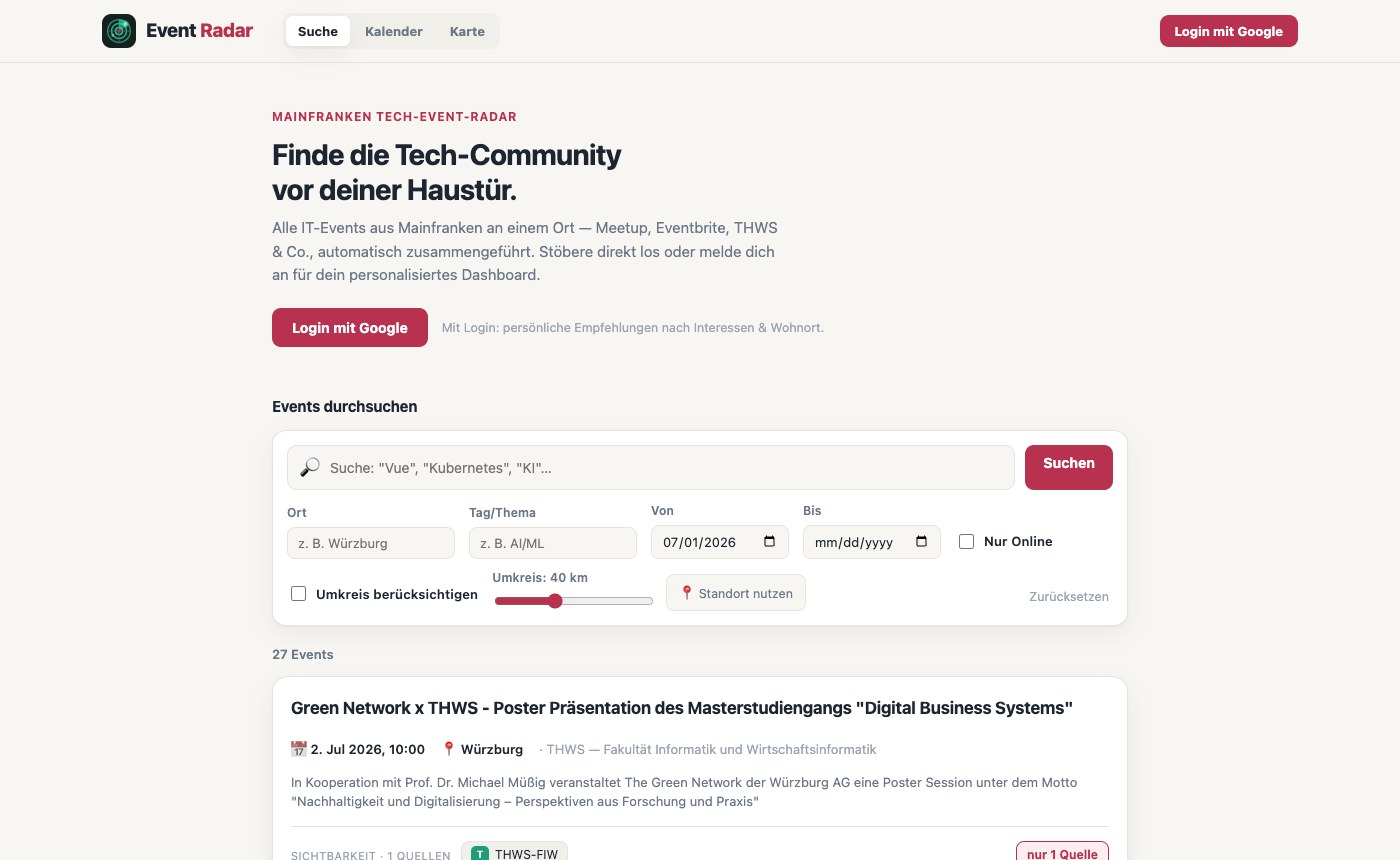
Home page with event feed and category filtering
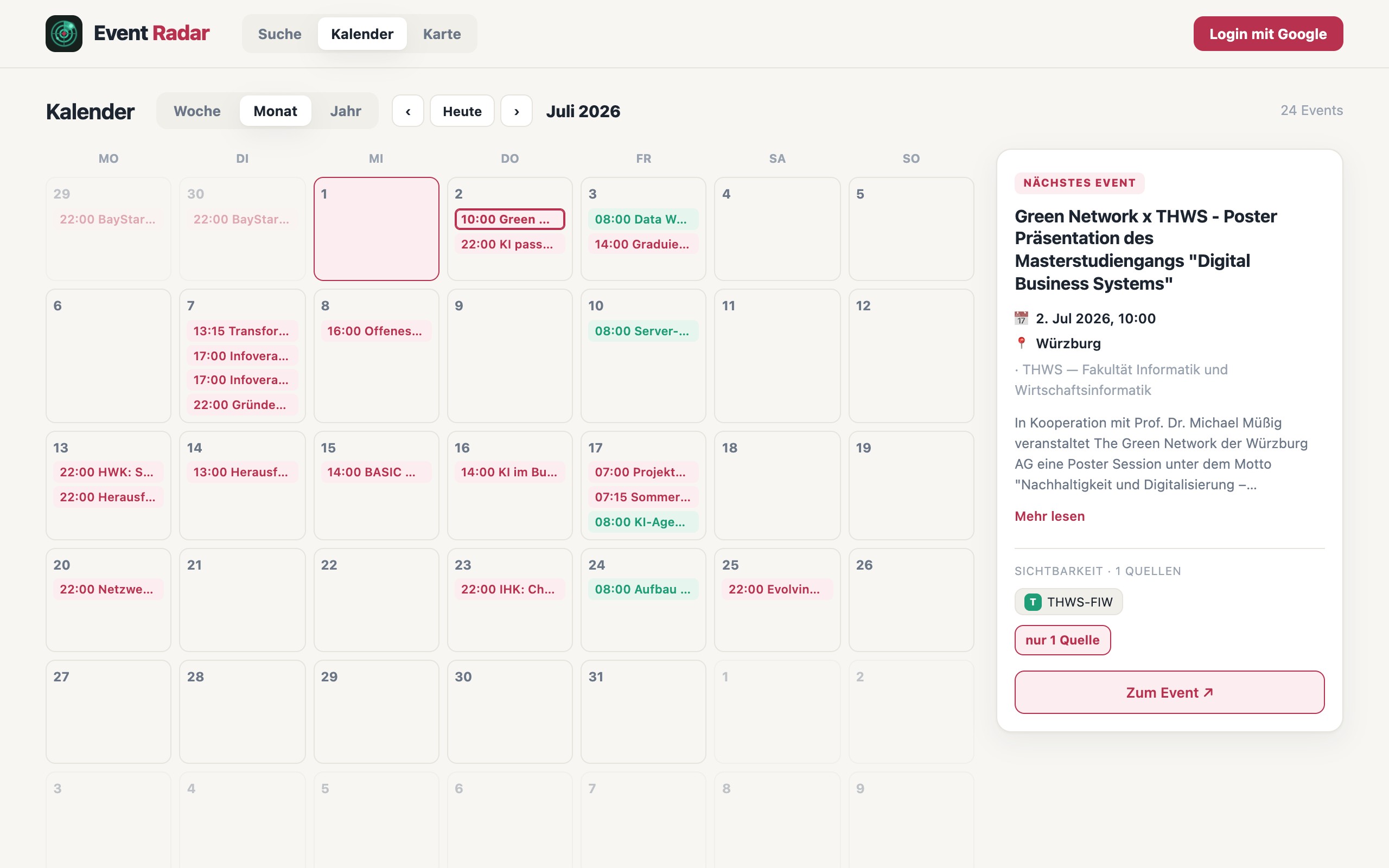
Calendar view: all events at a glance, with a detail panel on the right
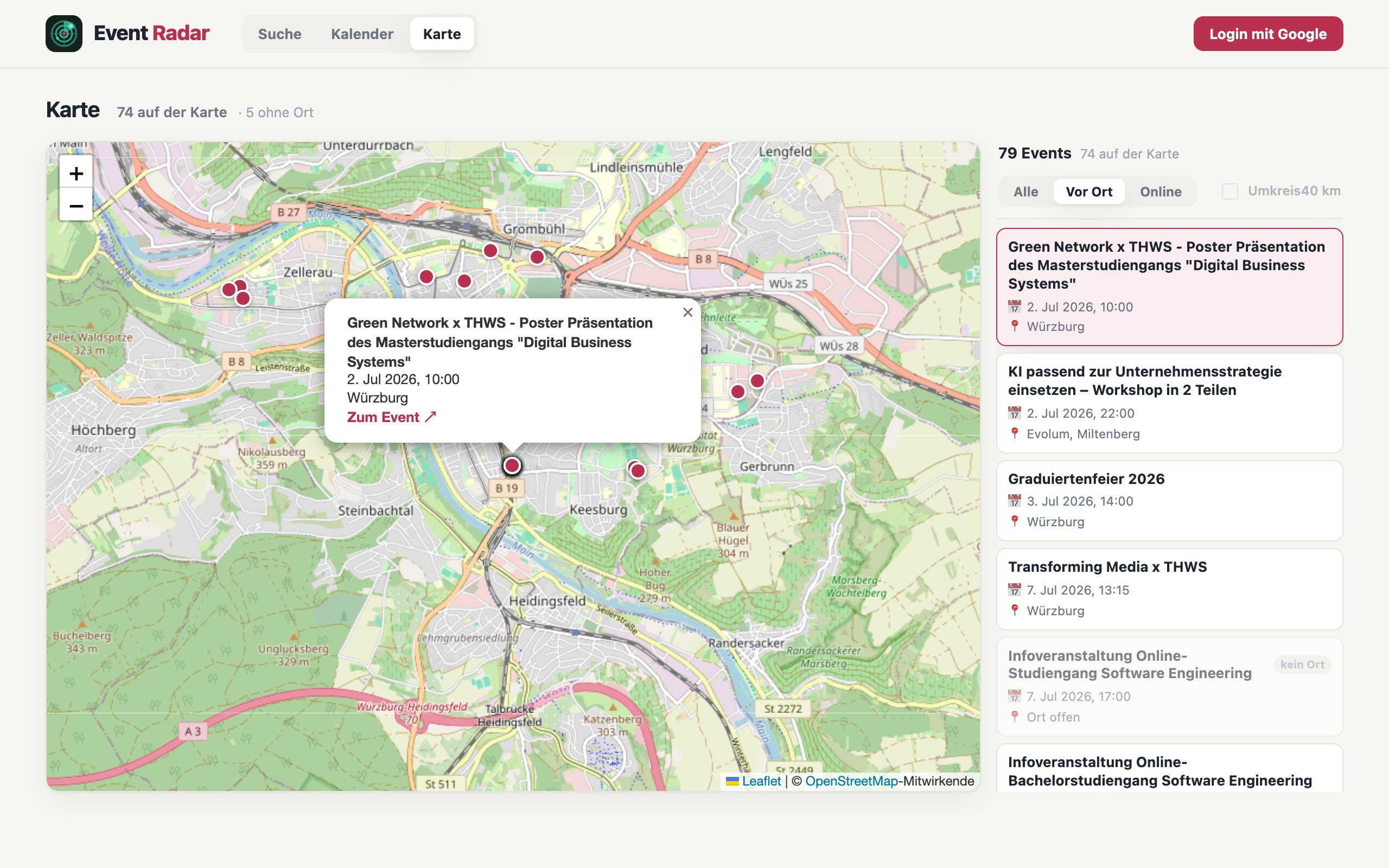
Map view: geographic distribution of events, on-site filter active
Technical Stack
Scraping & Ingest
Source-agnostic SourceAdapters (Python) pull Meetup, Eventbrite, RSS/ICS feeds and university calendars; cross-source deduplication via idempotent upsert on (source, external_id). New feeds can be registered at runtime via API — no deploy required.
AI & Enrichment
A Claude LLM weights topics and intent per event; geocoding via Nominatim/OpenStreetMap, radius search via Haversine distance directly in the database.
Backend & Frontend
FastAPI + SQLModel on PostgreSQL, REST API serving JSON (Swagger docs included). Frontend: Vue 3 + Vite, Leaflet map, installable PWA; login via Google OAuth with an httpOnly session cookie.
Eventradar keeps growing
The project has outgrown the hackathon prototype and is being expanded into a standalone platform. Interested in a pilot partnership?